
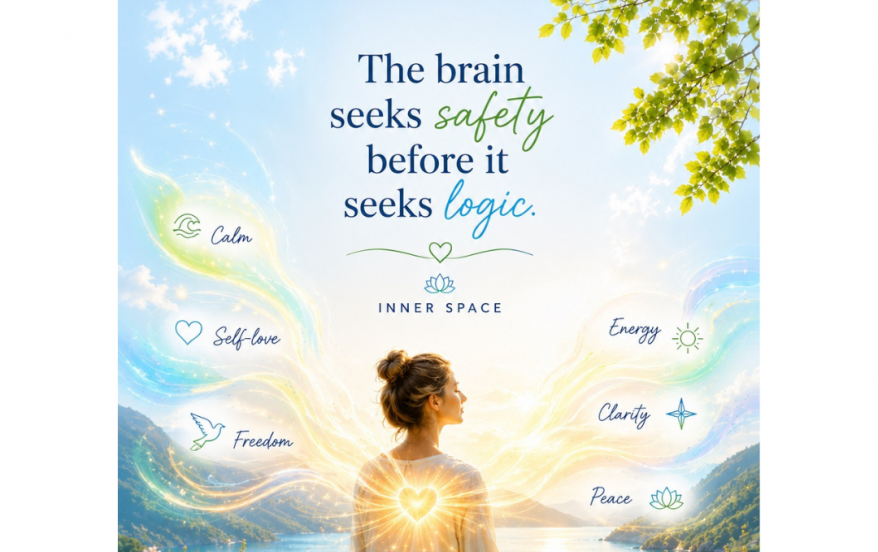
The Brain Seeks Safety Before Change
Most people already know what they “should” be doing to improve their health and wellbeing.
We know we would probably feel better with more sleep, less stress, healthier food, more movement, fewer late nights, less scrolling, and more time to slow down and reconnect with ourselves. In fact, we know it all – at least we think we do.
And yet, many intelligent, caring, capable people still find themselves eating emotionally, procrastinating, overworking, comfort-seeking, stress-snacking, or falling into habits they later regret.
Why? Because human behaviour is rarely driven by logic alone. The logical mind is powerful… but it is not always the strongest voice in the brain. Emotion, habit, nervous system patterns, conditioning and unconscious learning usually influence behaviour far more than people realise.
Recently, I heard a Professor speaking about how people tend to live according to their rules, incentives, and best interests. Although he was speaking in a very different context it struck me how this applies to health, habits, emotional eating, and wellbeing.
Most of our behaviour makes sense when we understand the emotional incentive behind it.
Firstly, the brain and nervous system are constantly learning:
“What helps me feel better?”
“What gives relief?”
“What feels rewarding?”
“What helps me cope?”
“What feels safe, familiar, comforting, or emotionally protective?”
And once the brain discovers something that reduces discomfort quickly, it remembers.
This is why emotional eating can become such a powerful pattern. Food is never “just food.” For many people, food has become linked with:
- comfort,
- reward,
- safety,
- relief,
- love,
- distraction,
- pleasure,
- grounding,
- celebration,
- escape,
- or emotional regulation.
A difficult day ends - and eating brings temporary relief. Stress rises - and sugar gives a quick dopamine boost. Loneliness appears - and snacking fills space emotionally as well as physically. Exhaustion builds - and highly processed foods offer fast energy and comfort.
The unconscious mind learns: “This helps.” And because the brain is designed to move toward what feels rewarding or relieving in the moment, and away from discomfort in any shape or size, the pattern strengthens over time.
This is important to understand because so many people blame themselves.
They think: “I have no willpower.” “What’s wrong with me?” “Why can’t I just stop?”. In some people this can lead to self-criticism and self-judgment.
But often, the behaviour is not the real problem. The behaviour is the solution the nervous system found. Perhaps not the healthiest solution long term, but a solution nonetheless.
"The behaviour is not the real problem. The behaviour is the solution the nervous system found."
That changes the conversation completely. Because once we stop attacking ourselves, we can begin asking much more useful questions:
“What is this behaviour doing for me?”
“What feeling am I trying not to feel?”
“What emotional state am I trying to create?”
“What does my nervous system actually need?”
This is where real change begins. Not through shame. Not through harsh self-criticism. Not through battling with ourselves every day. But through understanding the deeper incentives that drive behaviour.
Many people try to change habits while the brain still believes the old habit is in its best interests.
If part of the mind believes: “Eating helps me cope,” then simply removing the behaviour can feel emotionally threatening.
This is why so many people find themselves stuck in cycles of stress, reward, control, guilt, frustration, and starting again. The deeper emotional and nervous system needs beneath the behaviour may never have been fully understood.
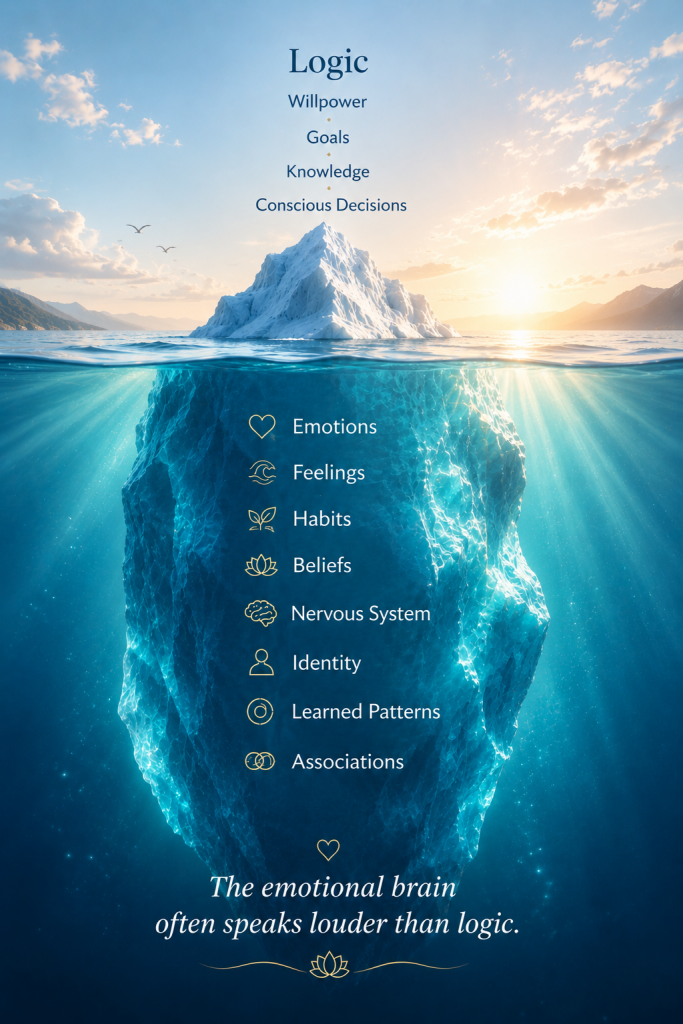
Lasting change often happens easily when new habits and incentives become stronger and more appealing than the old ones.
For example:
Feeling energised becomes more rewarding than overeating
Calm feels better than emotional numbing
Self-respect becomes more powerful than temporary comfort
Freedom feels better than compulsion
Emotional stability feels safer than using food for nervous system regulation
And also, this is not about perfection. Human beings will always seek comfort, pleasure, relief, and reward. That is part of being human. The goal is to not become rigid and fixed in a set of rules, or make decisions that make you feel deprived. The goal is to create a healthier relationship with food, comfort and wellbeing itself — and to reap the rewards both in the short term and the long term.
To teach the brain and body:
“There are other ways to feel safe.”
“There are other ways to feel calm.”
“There are other ways to experience reward, pleasure, rest, connection, and emotional relief.”
This is why approaches such as Hypnotherapy, BWRT and mindfulness can be so effective. They work beneath the surface. They help the brain update old rules and create new emotional associations. Because ultimately, lasting wellbeing is not usually created through punishment or pressure. It arrives when the mind and body begin working together as a partnership instead of against one another.
One of the most compassionate things we can remember is this – mostly, people are not usually choosing their behaviour consciously, they are following the strongest emotional pull or incentive available to them in that moment.
The brain is naturally drawn towards instant gratification, which is why short-term comfort can so easily override long-term wellbeing goals. When we truly understand that, we stop seeing ourselves negatively, harshly or with criticism. Instead, we begin seeing ourselves as human beings whose brains have simply learned certain survival strategies over time.
And with self-awareness, self-love and support, these strategies can change.
Six Steps Towards Lasting Change & Wellbeing
Step 1 - Identify Your Compelling Reason to Change
Real change usually begins with an emotional pull towards real lasting reward, not pressure or guilt. Ask yourself: Why does this truly matter to me? The stronger and more personal the reason, the more motivation the brain has to move towards change.
Step 2 - Understand the Current Rules, Beliefs & Emotional Incentives
Many behaviours are driven by unconscious “rules” the brain has learned over time, such as:
- “Food helps me cope.”
- “I deserve this after a hard day.”
- “Change feels difficult.”
- “Comfort keeps me safe.”
Bringing these patterns into awareness is the beginning of changing them.
Step 3 - Create New Beliefs, Rewards & Emotional Associations
The mind responds strongly to what feels rewarding and emotionally meaningful. Begin strengthening new associations:
- Choose calm instead of chaos
- Feel pride instead of guilt
- Embrace freedom instead of compulsion
- Discover energy instead of heaviness
- Nurture self-respect instead of self-criticism
Lasting change becomes easier when the new way genuinely feels better.
Step 4 - Create a Realistic Plan of Action and Celebrate Progress
The nervous system tends to feel safer with small, consistent steps rather than pressure, extremes, or all-or-nothing thinking. Simple, repeatable actions build trust in yourself and create momentum over time. Progress is far more important than perfection.
Remember to celebrate your wins along the way, however small they may seem. And if you have a difficult day, don’t let it define you. Put it behind you, learn from it, and begin again the next day.
Find support from people who are also on the path to wellbeing, and encourage each other along the way. Become your own cheerleader, finding inspiration in personal growth and achievement, and allowing the small positive decisions you make each day to bring their own rewards.
Step 5 - Learn to Work With Emotions Rather Than Escape Them
Many habits are attempts to avoid discomfort, stress, loneliness, boredom, overwhelm, or emotional exhaustion. Developing the ability to pause, regulate the nervous system, and stay present with feelings can reduce the need for old coping patterns.
Step 6 - Reinforce the Identity of the Person You Are Becoming
Change deepens when it becomes part of identity rather than temporary effort. Instead of constantly thinking:
“I’m trying to change,” say to yourself “I am becoming someone who takes care of myself.”
“I deserve to be my best, healthiest self.” “I am capable of calm, healthy choices.”
The brain responds powerfully to repetition, emotional experience, and identity. Over time, the new patterns begin to feel more natural and automatic. This is why approaches such as hypnosis, BWRT and guided meditation can help support deeper and more lasting change.